Why Does My RV Generator Run for 5 Minutes and Shut Off at Utah Altitudes?
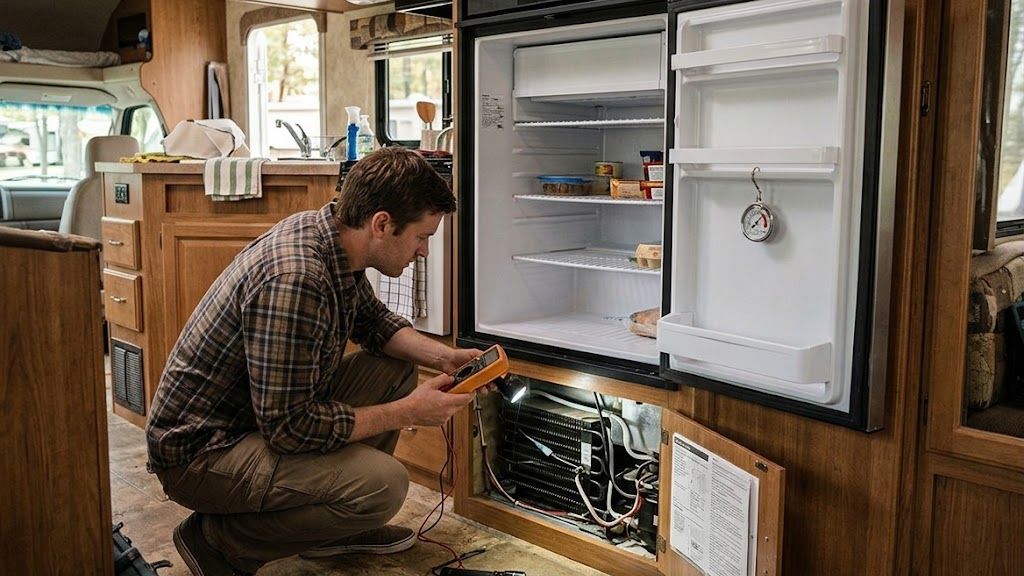
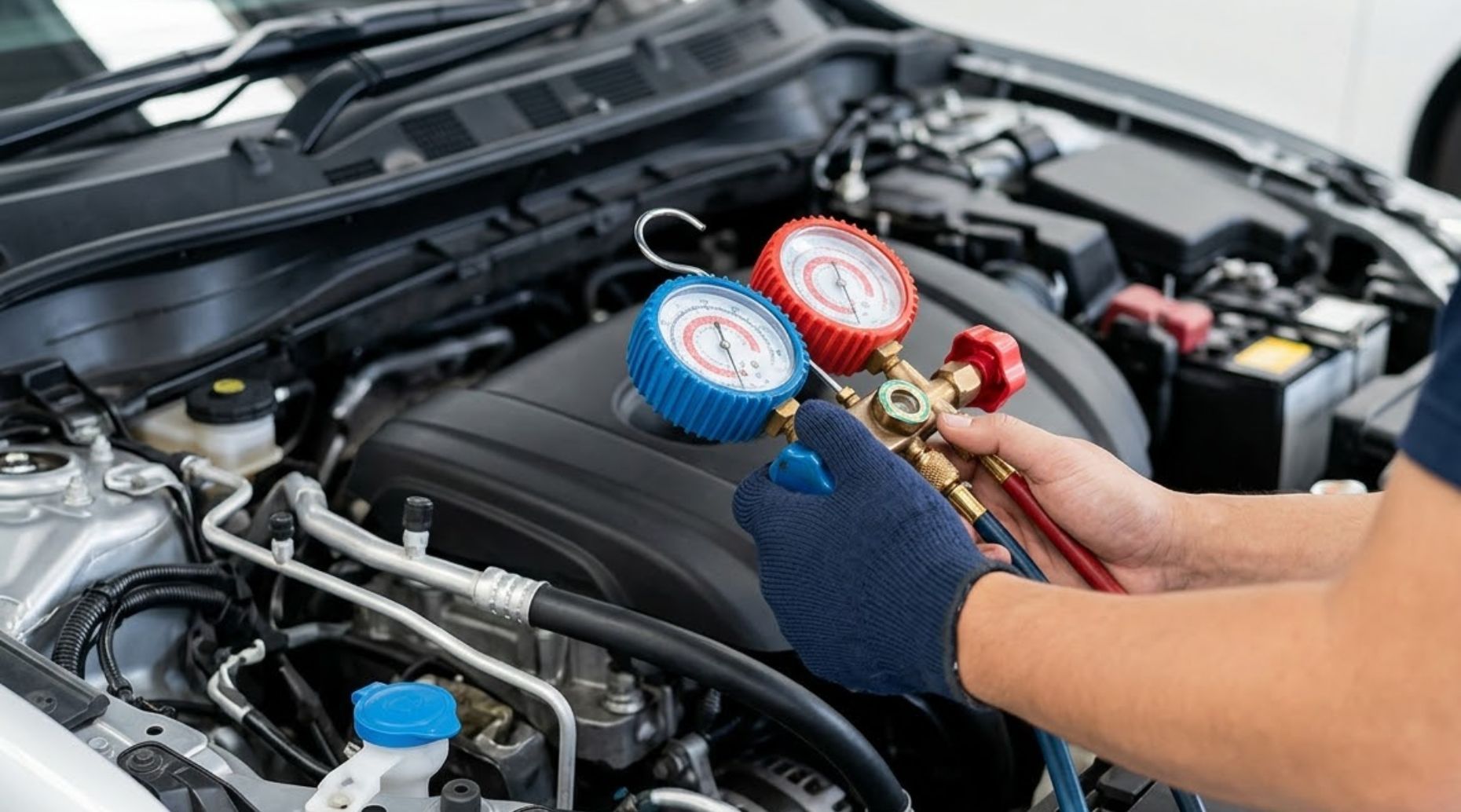
When an auxiliary power unit starts smoothly but dies after roughly three to five minutes at high elevation, the failure is almost always caused by an overly rich air-fuel mixture, thermal fuel boiling, or a low-oil safety switch triggered by a steep parking angle. As you climb into Utah mountain passes, thinner air deprives the engine of oxygen, making the fuel mixture excessively rich until the spark plug fouls or the combustion chamber overheats. Securing dependable RV generator repair services in Salt Lake City before heading into alpine recreation corridors ensures your carburetor jetting and safety sensors are calibrated for thin air.
This brief five-minute runtime is a classic mechanical symptom with a precise explanation. The engine starts on its initial choke cycle or cold fuel charge, but as soon as the automatic choke opens and the engine attempts to run under normal load at eight thousand feet, the lack of atmospheric oxygen chokes the combustion cycle. Understanding how altitude alters small-engine physics helps you troubleshoot the root cause in the field and prevent ruined camping trips.
Why Does My Generator Run for a Few Minutes Then Die at High Altitude?
The primary reason is that reduced atmospheric pressure creates an over-rich fuel condition that fouls spark plugs and causes rapid carbon buildup. When you ascend from valley elevations to mountain campgrounds, your engine receives approximately twenty to thirty percent less air density, yet standard carburetors continue delivering the same volume of liquid fuel. Once the choke disengages after a few minutes of idling, the engine floods internally, loses combustion efficiency, and stalls under the slightest electrical demand.
A secondary culprit is low oil pressure safety shutdown caused by uneven terrain. Many popular dispersed camping sites along the Wasatch Range feature steep grades that tilt the generator oil reservoir away from the internal low-oil sensor. After a few minutes of vibration, the sensor detects a false low-oil condition and automatically cuts ignition grounding to protect the engine.
Timing offers the clearest diagnostic clue in these situations. An engine that dies within seconds of starting usually indicates a fuel supply blockage or a failed ignition module. An engine that runs a full five minutes before stalling points instead to a heat-related condition, because that interval is precisely how long a small displacement engine needs to reach full operating temperature.
Recreational vehicle owners often misinterpret this pattern as a failing generator that needs replacement. In reality, the engine hardware is usually healthy, and the issue lies with calibration settings designed for lower elevations. Correcting the fuel mixture and airflow restores normal operation without expensive component replacement.
How Altitude Affects RV Generator Repair Services in Salt Lake City
Scheduling experienced RV generator repair services in Salt Lake City gives motorhome owners access to specialized elevation testing equipment before they travel into high-altitude corridors. Salt Lake Valley rests at approximately 4,200 feet above sea level, serving as the gateway to alpine recreation areas like Mirror Lake Highway, Guardsman Pass, and Strawberry Reservoir that exceed 8,000 to 10,000 feet. Engines calibrated solely for sea-level operation cannot maintain stable electrical frequency when transitioning across these dramatic elevation changes.
Atmospheric derating affects every internal combustion powerplant, regardless of whether it burns gasoline, propane, or diesel fuel. For naturally aspirated auxiliary engines, horsepower decreases by roughly three and a half percent for every one thousand feet of elevation gain above sea level. This predictable power loss directly reduces the electrical wattage your generator can continuously supply to onboard air conditioners, microwaves, and battery chargers.
Elevation Power Loss and Altitude Derating Calculations
Understanding how much usable wattage your generator loses at various Utah mountain passes helps you manage electrical loads realistically and prevents sudden overload shutdowns.
| Popular Utah Destination | Elevation Above Sea Level | Approximate Power Derating | Actual Output of a 4,000W Unit |
|---|---|---|---|
| Salt Lake City Valley | 4,226 feet | 14.8% power loss | 3,408 maximum watts |
| Park City Mountain Base | 6,900 feet | 24.1% power loss | 3,036 maximum watts |
| Strawberry Reservoir | 7,600 feet | 26.6% power loss | 2,936 maximum watts |
| Guardsman Pass Summit | 9,700 feet | 33.9% power loss | 2,644 maximum watts |
| Mirror Lake (Uintas) | 10,050 feet | 35.2% power loss | 2,592 maximum watts |
This steep elevation power derating Utah mountain passes means a standard four-thousand-watt generator at ten thousand feet operates like a twenty-six-hundred-watt unit. Attempting to start a high-draw rooftop air conditioner without a soft-start capacitor will instantly trigger an electrical overload stall.
Top Reasons Your RV Generator Dies After 5 Minutes in the Mountains
When diagnosing an auxiliary engine that starts cleanly but shuts down shortly afterward, technicians examine four distinct mechanical systems. Isolating the specific failure mode prevents unnecessary part replacements.
Incorrect Carburetor Altitude Dial Setting
Most modern Cummins Onan gasoline generators feature a mechanical altitude adjustment knob on the carburetor bowl. This dial controls the main fuel metering jet to lean out the fuel delivery as atmospheric pressure drops. Performing a proper high altitude generator carburetor adjustment by rotating the dial to match your current elevation restores the proper fourteen-to-one air-fuel ratio and prevents plug fouling.
Vapor Lock and Thermal Heat Soaking
At high elevations, the boiling point of gasoline drops significantly, sometimes falling below 130 degrees Fahrenheit in summer weather. Within a compact, insulated RV generator compartment, ambient temperatures quickly surpass this threshold after five minutes of run time. Liquid fuel turns into vapor inside the supply lines, causing fuel pump cavitation and sudden fuel starvation. The experienced mobile technicians at The Wizard Group install thermal insulation wraps and auxiliary cooling ducting to prevent persistent fuel vapor lock in mountain environments.
Clogged Spark Arrestor Screen
Running an over-rich fuel mixture at high altitudes produces heavy soot and unburnt carbon particles that accumulate inside the exhaust spark arrestor. When exhaust backpressure builds up after several minutes of operation, the engine can no longer exhale spent combustion gases, leading to immediate power loss and stalling.
Low Oil Level and Tilting Sensor Activation
Auxiliary power units feature sensitive low-oil float switches designed to prevent catastrophic engine seizure. If your camper is parked on an unlevel mountain pad, oil sloshes away from the pickup tube, tripping the protective kill switch after the initial startup oil pressure stabilizes.
Diagnostic Flowchart: Testing Your Generator in the Mountains
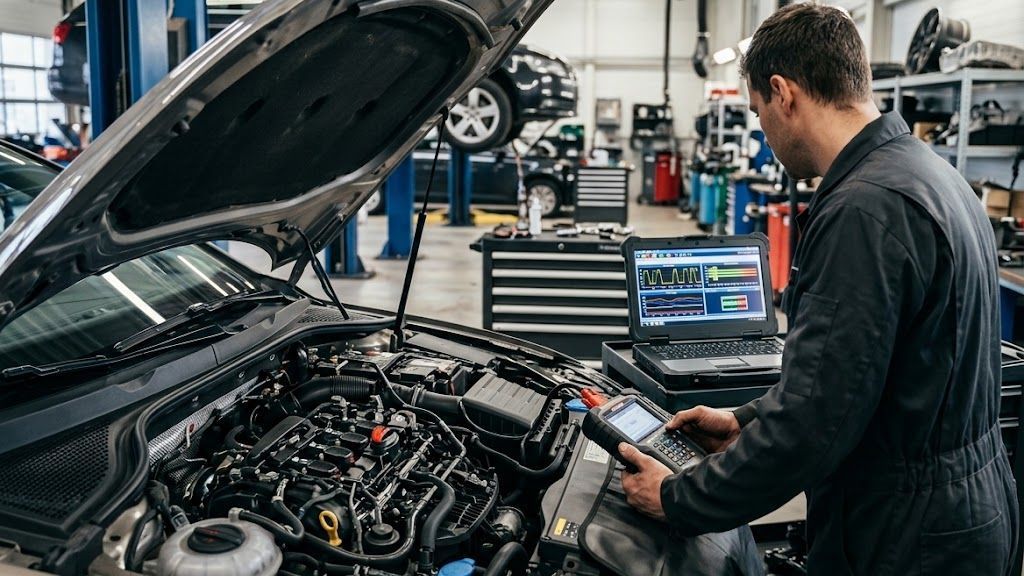
Before calling for roadside emergency recovery, follow this structured diagnostic sequence to isolate why your generator cuts out after five minutes.
| Diagnostic Step | Action to Perform | What the Result Means |
|---|---|---|
| 1. Check Altitude Dial | Verify knob matches current elevation bracket | If set to sea level at 8,000 ft, engine is flooding |
| 2. Inspect Spark Plug | Remove and examine the ceramic electrode tip | Heavy black soot confirms rich air-fuel mixture |
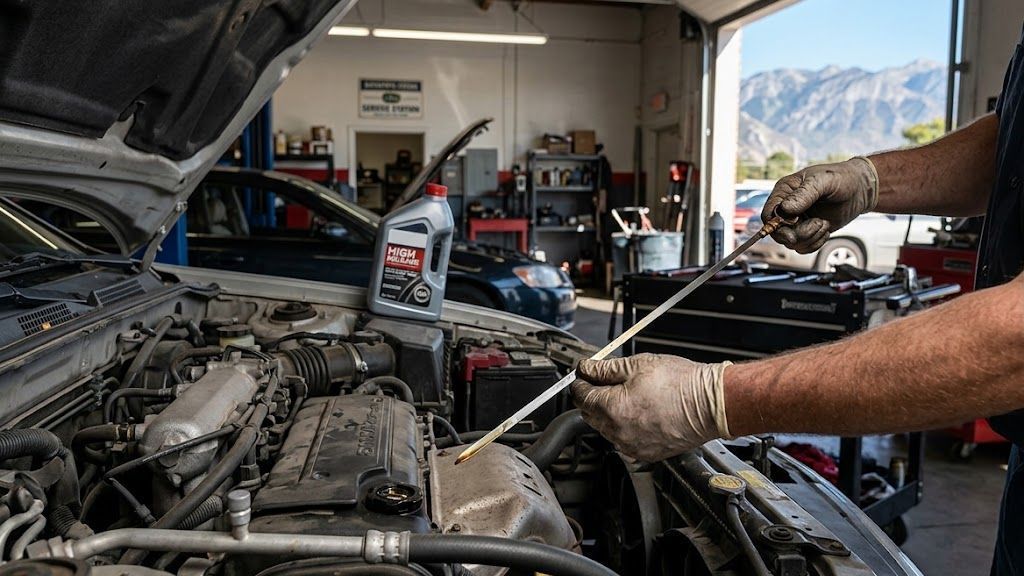
| 3. Verify Oil Level and Level Rig | Check dipstick on perfectly flat ground | Low oil or steep tilt grounds the ignition circuit |
| 4. Test Under Zero Load | Turn off all interior RV circuit breakers | If it runs fine unloaded, power demand exceeds high-altitude wattage |
| 5. Check Fuel Cap Vent | Loosen fuel cap slightly while running | If it stays running, the fuel tank vent is restricted |
If your auxiliary generator continues dying after working through these field checks, internal carburetor jet wear or stator failure is likely present. You can contact us to have certified mobile specialists perform complete on-site diagnostic testing at your campsite, storage unit, or residential driveway.
Preventative Modifications for High-Altitude RV Camping
Equipping your recreational vehicle with the right hardware upgrades ensures consistent auxiliary electrical power across all western mountain states. Implementing these proactive adjustments protects your equipment and enhances off-grid comfort.
- Install an A/C Soft-Start Kit: Rooftop air conditioners draw enormous locked-rotor amps upon startup. A soft-start unit reduces starting electrical spikes by up to seventy percent, allowing a derated generator to run climate systems at high elevations.
- Clean the Spark Arrestor Annually: Remove the brass cleanout plug from the bottom of the generator muffler and run the unit under heavy load to blow out accumulated carbon soot.
- Use High-Quality High-Altitude Engine Oil: High-grade synthetic 15W-40 or 10W-30 oil maintains protective viscosity under extreme compartment heat while flowing smoothly during sub-freezing mountain mornings.
- Maintain Fresh, Non-Ethanol Fuel: Ethanol attracts atmospheric moisture and boils at lower temperatures, exacerbating vapor lock tendencies in thin mountain air.
- Ensure Compartment Airflow Clearance: Never store camping chairs, leveling blocks, or gear bags in the generator compartment where they obstruct intake louvers or exhaust airflow.
Taking these preventative steps keeps your generator running smoothly whether you are dry camping in high alpine valleys or boondocking in desert recreation areas. Proper maintenance eliminates the frustration of unexpected power failures when you need electricity most.
Load management deserves equal attention alongside mechanical preparation. Running your refrigerator on propane rather than electricity, staggering appliance startups instead of powering everything simultaneously, and shifting heavy draws like microwaves to daylight hours all reduce peak demand. These simple habits keep total consumption comfortably below your derated output ceiling.
It also helps to test your setup at elevation before committing to a remote trip. Run the generator under a realistic load in your driveway, then repeat the test at a nearby mountain pullout to observe how output changes. Discovering a calibration problem twenty minutes from home is far preferable to finding it in a remote canyon with no cellular signal.
Frequently Asked Questions
How do I adjust my Onan generator for high altitude?
Locate the black adjustment knob on the bottom or side of the carburetor housing behind the green service access panel. Turn the dial until the pointer aligns with your current camping altitude bracket, typically marked in intervals of two thousand, five thousand, and nine thousand feet. Remember to return the dial to lower settings when returning to valley elevations.
Why does my generator run with no load but die when the A/C turns on at high elevation?
Your generator loses roughly three and a half percent of its horsepower per one thousand feet of elevation gain. At eight thousand feet, a four-thousand-watt unit can only generate approximately twenty-nine hundred watts, which is insufficient to handle both the high startup surge of an air conditioner compressor and baseline house electrical loads.
Can running a generator at high altitude without adjustments damage the engine?
Yes, running an unadjusted carburetor in thin air forces the engine to run excessively rich, leading to carbon buildup on valves, fouled spark plugs, unburnt fuel washing protective oil from cylinder walls, and clogged exhaust catalytic screens.
What is generator vapor lock and how do I fix it?
Vapor lock occurs when low atmospheric pressure and high compartment temperatures cause liquid gasoline to boil inside the fuel line before reaching the carburetor. To resolve it, open the generator compartment door to improve ventilation, allow the unit to cool for thirty minutes, and ensure high-grade fuel without ethanol is being used.
Why does my generator blink a light code when it shuts off?
Modern RV generators feature onboard diagnostic computers that blink the start switch light in specific numerical sequences after a shutdown. A single, double, or triple flash pattern indicates fault categories such as low oil pressure, overcurrent overload, or abnormal engine speed, pointing technicians directly to the root mechanical cause.
Conclusion
An auxiliary powerplant that quits after five minutes at high elevation is sending a clear mechanical signal that its air-fuel ratio, cooling capacity, or oil safety circuit requires attention. By understanding how thin mountain air reduces atmospheric oxygen and derates total electrical output, recreational vehicle owners can adjust their equipment properly and manage power demands intelligently. For complex electrical diagnostics, carburetor jet overhauls, and comprehensive tune-ups, turning to professional RV generator repair services in Salt Lake City provides the long-term reliability you need.
Before packing your camper for an upcoming trek through Utah's breathtaking mountain passes, ensure your auxiliary electrical systems are fully prepared to handle the demands of high elevation. To guarantee uninterrupted power for your heating, cooling, and refrigeration systems on the road, schedule an appointment with The Wizard Group today to have certified technicians inspect and calibrate your generator for peak mountain performance.