What Causes Engine Oil Sludge, and Can a Car Oil Change in Bountiful, UT Reverse It?
Engine oil sludge forms when oil oxidizes from heat, short trips, and overdue service, leaving deposits that block oil passages. Light buildup often reverses with two or three short-interval changes. A routine car oil change in Bountiful, UT will not touch heavy sludge, which needs mechanical cleaning.
What causes engine oil sludge?
Oil breaking down faster than it gets replaced. Heat oxidizes the base oil, combustion byproducts contaminate it, additives deplete, and what's left stops staying in solution. The residue drops out onto valve covers, oil galleries, and the pickup screen.
Gulf Oil's summary of the causes matches what shops actually see: excessive heat, neglected service intervals, contaminants like coolant and moisture, stop-start driving, long periods of inactivity, and a clogged PCV system.
Three of those deserve unpacking, because they're the ones people don't expect:
- Short trips. An engine that never reaches full operating temperature never boils off the water and unburned fuel that combustion puts into the crankcase. Both accelerate oil breakdown. This is the single most common cause in cold climates and it has nothing to do with how good your oil is.
- A clogged PCV system. Crankcase ventilation exists to pull those vapours out. When the valve or its passages block up, the vapours stay in, and sludge follows quickly. It's a cheap part that causes expensive damage.
- Coolant intrusion. A failing head gasket or intake gasket puts coolant into the oil, which emulsifies it into something that no longer lubricates. If that's your cause, a coolant leak into the oil is the actual repair and every oil change until it's fixed is money burned.
How bad is your oil sludge buildup?
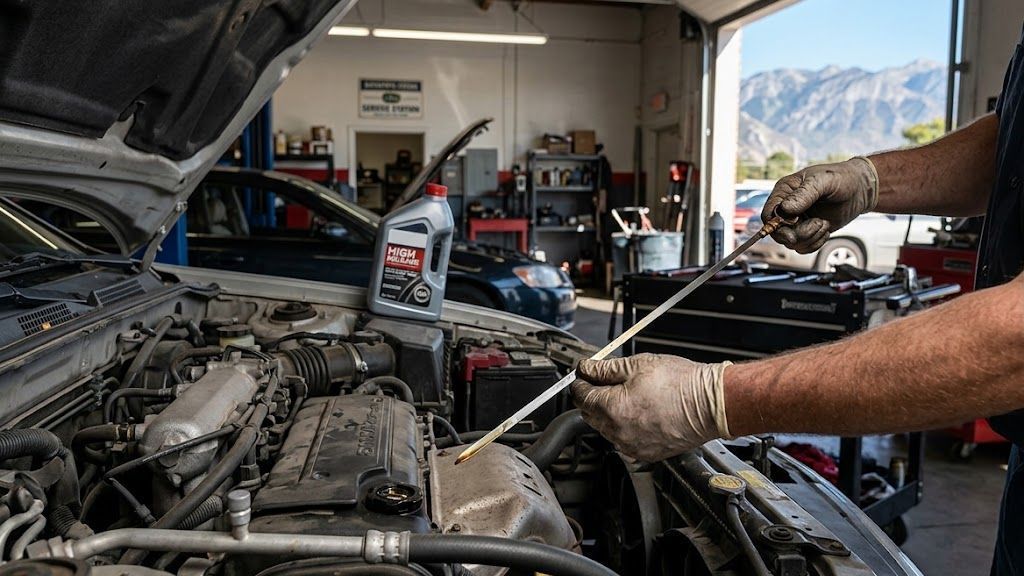
Pull the oil fill cap and look at the underside. Thirty seconds, no tools, and it tells you almost everything you need to know before anyone quotes you anything.
| What you see | Severity | What it means |
|---|---|---|
| Clean metal, thin amber film | None | Nothing to do |
| Light brown or tan film, metal still visible | Light | Reversible with short-interval changes |
| Thick brown deposits, metal partly obscured | Moderate | Treatable, chemical flush is defensible |
| Black tar or coffee-grounds texture | Heavy | Do not flush. Mechanical cleaning |
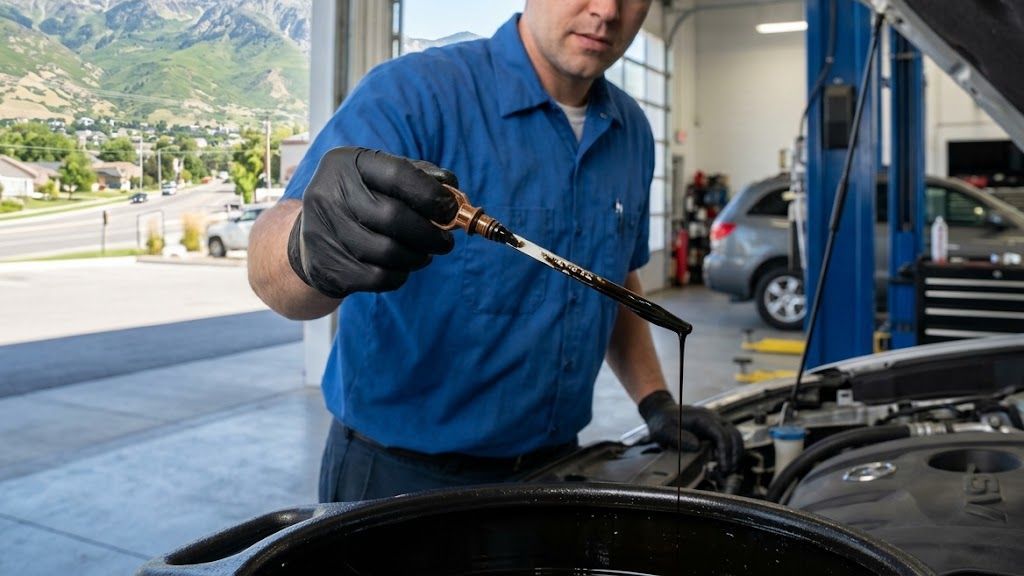
| Chunks or flakes on the dipstick | Heavy | Stop. Oil starvation risk |
| Creamy beige, coolant low | Different problem | Coolant intrusion, not sludge |
The cap under-reports slightly, since it's the coldest surface and collects condensation as well as sludge. If the cap looks bad, the next step is a look inside a valve cover or an oil pan drop, which is the only way anyone can honestly grade a sludged engine.
That last row matters. Creamy beige residue in a Bountiful winter is usually condensation from short trips rather than a head gasket, and it's a different diagnosis with a different fix. Sludge is dark. Coolant contamination is pale.
Can a shop reverse engine oil sludge?
Sometimes, and the honest answer splits three ways by severity. The dangerous mistake is applying the light-sludge fix to a heavy-sludge engine, which is the opposite of what most advice suggests.
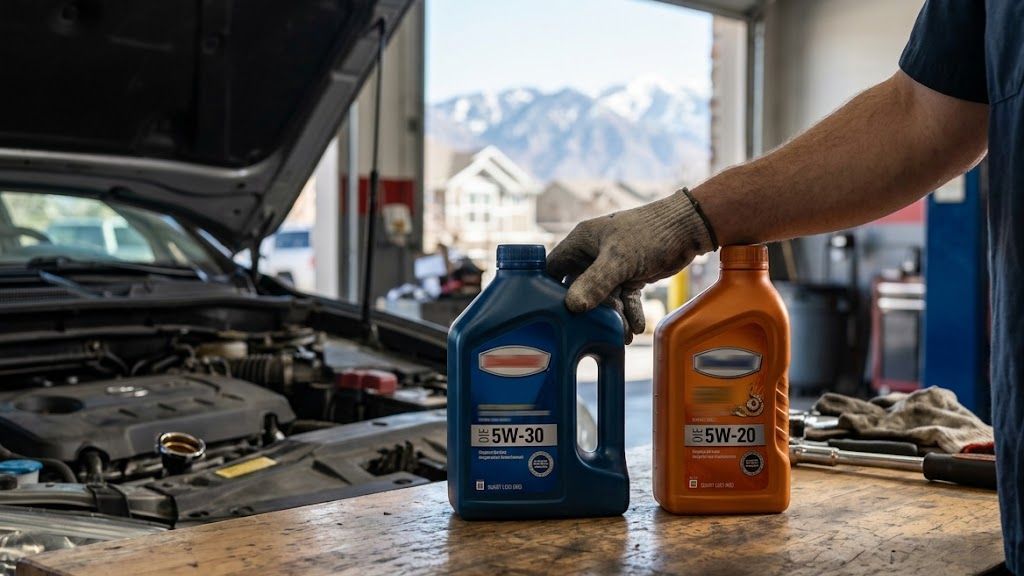
Light sludge: yes, with patience. Two or three oil changes at half your normal interval, using a high-detergent synthetic, will lift soft deposits gradually and carry them out with the drain. No solvent, no risk, and it works. It takes months rather than an afternoon, which is why nobody sells it.
Moderate sludge: a flush is defensible. This is where a chemical treatment does what it says — dissolves deposits and holds them in suspension long enough to drain out.
Heavy sludge: no, and a flush is the worst option available. Mechanical cleaning is the only real answer: dropping the pan, cleaning or replacing the oil pickup screen, pulling the valve covers, and cleaning by hand. That's internal engine cleaning measured in hours of labour, and at that point the sensible conversation is whether to rebuild or replace rather than what to pour in.
When does an engine flush service help?
On a light-to-moderate engine where the deposits are still soft and the pickup screen is clear. Used properly — correct dose, short idle, immediate drain and refill with a new filter — it removes material that a normal oil change leaves behind.
It's also reasonable as a one-time reset when you buy a used car with unknown service history and the cap looks merely dirty rather than tarred.
When does a flush make it worse?
When there's enough hardened deposit that loosening it creates a blockage. This is the failure mode that turns a maintenance decision into an engine replacement, and it's well documented among people who work on neglected engines: solvent breaks a sheet of sludge free, the fragments travel to the oil pickup screen, the screen blocks, oil pressure drops, and bearings fail in minutes.
Gulf Oil puts the same caution more carefully, noting a flush "can do more harm than good" with wrong concentrations, and that harsh chemicals can attack rubber seals in older engines. On a high-mileage engine those seals may already be the only thing holding back a leak.
So the rule inverts the intuition: the worse the sludge, the less appropriate a chemical flush becomes. If the dipstick has chunks on it, the flush bottle is not the answer, and any shop reaching for one without looking inside first hasn't diagnosed anything.
Is sludge always caused by neglect?
No, and this is worth knowing before you blame yourself or a previous owner. Some engines sludged despite documented maintenance, because of how they were designed.
The best-documented example is Toyota's. Vehicles built with the 2.2L four-cylinder or 3.0L V6 between 1997 and 2002 developed sludge at rates that produced a class-action settlement, and Toyota extended coverage on up to 7.5 million vehicles to eight years and 120 days regardless of mileage, agreeing to pay for sludge damage. Owners had followed the factory schedule. The combination of a marginal crankcase ventilation design and a 7,500-mile recommended interval was enough.
Chrysler's 2.7L V6 of the same era earned a similar reputation, as did several turbocharged engines where oil cooks in the bearing housing at shutdown.
The practical lesson isn't that maintenance doesn't matter. It's that a factory interval is a floor rather than a guarantee, and on an engine with a known history, shortening it is cheap insurance. If your engine is on that list, a shorter service schedule is the entire prevention strategy.
Why does Utah driving cause sludge?
Because the Wasatch Front produces the exact conditions sludge needs, four months a year. Short trips in sustained cold is the textbook recipe, and inversion season is nothing else.
Here's the mechanism. Combustion puts water vapour and unburned fuel into the crankcase. An engine at full operating temperature evaporates both and the PCV system vents them. An engine that runs four miles from the east bench to I-15 at 20°F never gets there. The water and fuel stay, dilute the oil, and accelerate oxidation.
Do that five days a week from December through March and you've run roughly eighty cold cycles without a single one that clears the crankcase. A driver in a mild climate doing identical mileage isn't accumulating the same damage.
Summer adds the other end. Towing over Parleys or running I-84 loaded in ninety-five degree heat pushes oil temperatures high enough to accelerate oxidation directly. Between the two seasons, a Bountiful vehicle sees both sludge mechanisms in the same year.
The fix isn't exotic. It's a shorter interval than the manual's normal-service number, plus a genuine highway run once or twice a month in winter to get the engine hot enough to clear itself. Twenty minutes at speed does more than any additive.
How do you keep sludge from coming back?
Five things, and the first two do most of the work:
- Change oil on the severe-service schedule. For most Bountiful drivers that means 5,000 miles rather than 7,500 or 10,000. Sludge is a function of how long oil stays in, more than what brand it is.
- Get the engine fully hot regularly. A weekly highway run in winter clears accumulated moisture and fuel. This costs nothing and is the most underrated item on the list.
- Replace the PCV valve on schedule. It's an inexpensive part whose failure causes exactly this problem. Most manuals specify an interval; most owners have never checked it.
- Use a licensed synthetic. AAA's testing found synthetic outperformed conventional by 47% in industry-standard tests, including deposit formation, which is precisely the mechanism at issue here.
- Fix oil and coolant leaks promptly. Low oil runs hotter and oxidizes faster, and coolant in the oil creates sludge directly. Persistent noise or pressure warnings belong in the urgent engine warning signs category, not the wait-and-see one.
Booking short-interval oil changes is the whole strategy for an engine that's already clean. Prevention is genuinely cheap here in a way that treatment never is.
Frequently Asked Questions
Is an engine flush service safe?
On a light or moderately dirty engine, yes, when dosed and drained correctly. On a heavily sludged engine it's genuinely risky, because loosened deposits can block the oil pickup screen and starve the bearings. Have someone look at the condition before agreeing to one.
Can synthetic oil clean out existing sludge?
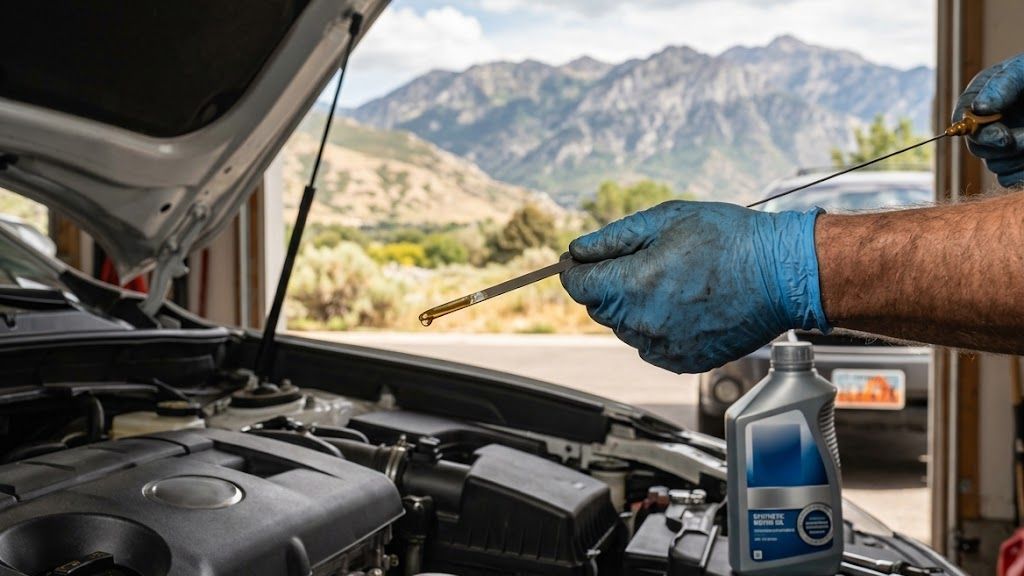
Gradually, yes. Synthetic carries a stronger detergent package that lifts soft deposits over successive changes. It won't dissolve hardened tar, and switching to synthetic in a sludged engine sometimes reveals a leak that deposits were plugging. That leak already existed.
How much does sludge removal cost?
Chemical treatment is usually the price of an oil change plus the product. Mechanical cleaning — dropping the pan, replacing the pickup screen, cleaning valve covers — runs into several hours of labour. Get the engine graded first, because the two figures aren't remotely comparable.
What are the symptoms of engine sludge?
Dark deposits under the oil fill cap, an oil pressure warning light, valvetrain ticking that doesn't clear when warm, overheating, and reduced power. Chunks or flakes on the dipstick mean stop driving. Many engines show sludge on the cap long before any symptom appears.
Will an oil change alone fix sludge?
One won't. Two or three at half the normal interval will clear light buildup, because each change removes some suspended material and the fresh detergent package keeps working. That's the safe way to treat mild sludge, and it's slower than any product on a shelf.
Does idling cause engine sludge?
Extended idling contributes, yes. The engine runs cool, combustion is less complete, and more unburned fuel reaches the crankcase. Warming a car up for twenty minutes in the driveway on a January morning is worse for the oil than driving it gently.
Can a sludged engine be saved?
Often, if the oil pickup screen is still passing oil and there's no bearing damage. Once oil pressure has dropped and the engine has run that way, the damage is usually done. The deciding factor is whether it was caught before starvation, not how thick the sludge looks.
Conclusion
Sludge is a severity question before it's a product question, and the rule runs opposite to instinct: the worse the buildup, the less appropriate a chemical flush becomes. Pull the fill cap and look — light tan film clears with two or three short-interval changes, thick deposits justify a flush, and black tar or flakes on the dipstick means someone needs to look inside before anything gets poured in. Prevention costs almost nothing here: a 5,000-mile severe-service interval, a PCV valve replaced on schedule, and a genuine highway run once a week through inversion season. Wizard's Automotive & RV can grade the engine properly instead of guessing from the cap. Schedule a consultation with Wizard's Automotive & RV before you agree to a flush or a quote.