How Much Does a Full Synthetic Car Oil Change in Bountiful, UT Cost in 2027?
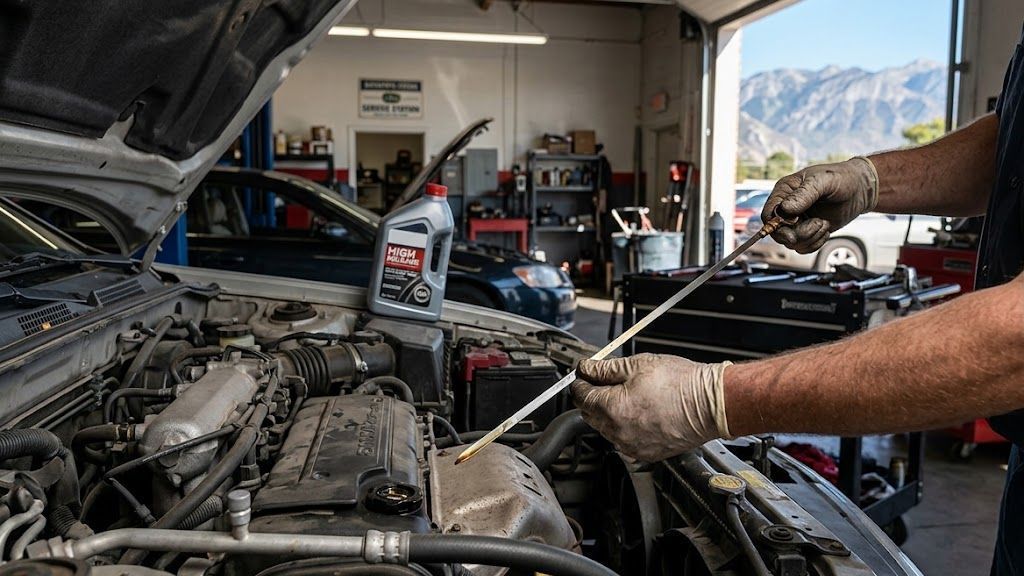
A full synthetic car oil change in Bountiful, UT costs $85 to $140 at current prices, up from roughly $70 to $120 before the 2026 base oil shortage, and there's little sign of relief before mid-2027. Quick-lube chains sit at the low end and dealerships at the high end. Engine oil capacity moves the price more than any other single factor. If your car takes an ultra-thin grade like 0W-8 or 0W-16, availability may matter as much as price.
Why are synthetic oil prices still rising?
Supply, not the shop. Group III base oils, the highly refined stock most full synthetics are built from, got harder to source in 2026 after disruptions in the Middle East. Industry reporting puts roughly 44% of U.S. Group III supply with three Persian Gulf producers, so when that supply chain broke, the cost landed on the counter. Fox 5 Atlanta reported that oil changes once running $60 to $65 could climb to $85 to $90, with some drivers already paying north of $120.
It's not a rumor at the retail level either. Valvoline, one of the largest oil service chains in the country, added a temporary surcharge to in-store oil changes in mid-2026 while crude sat near $90 a barrel.
And it hasn't eased. By late September, shops were reporting synthetic oil costs 20% to 30% higher than in June, and Costco had started limiting how much motor oil customers could buy. The squeeze is worst on the low-viscosity grades used in newer hybrids and fuel-efficient engines. Industry suppliers expect supply to stay tight into mid-2027, so budget for the current range rather than waiting for prices to fall back.
What if your car takes 0W-8 or 0W-16?
Call ahead, and don't assume the shop has it. In an April 30, 2026 dealer bulletin, Toyota warned that it and its supplier ExxonMobil might struggle to meet demand for 0W-8 and 0W-16, and authorized temporary substitutions: 0W-16 in place of 0W-8, and 0W-20 in place of 0W-16, for one service interval only.
That's Toyota's approval for its own engines, not a general rule. If your owner's manual specifies an ultra-thin grade, ask three things when you book:
- Do you have my grade in stock?
- If not, what will you use instead?
- Has my manufacturer approved that substitute?
If a one-grade-up substitute goes in, get it written on the invoice, and go back to the specified grade at the next change.
A note on the newer oil standards: ILSAC GF-7 and API SQ began licensing in March 2025, but they aren't what's driving hybrid owners' bills right now. The price and availability of the thin grades is a supply story. If you drive a 2016 Camry on 0W-20, the specs have almost nothing to do with your bill. The shortage still does.
What is a full synthetic oil change price by shop type?
Expect $85 to $140 in Davis County for a standard passenger car on full synthetic. Where you go moves that number by about $50.
| Where you go | Current full synthetic price | What you're paying for |
|---|---|---|
| Quick-lube chain (Valvoline, Jiffy Lube) | $75–$110 | Speed. 15-minute service, advertised "from" pricing, upsells at the window |
| Independent shop | $80–$120 | A tech who sees the car on a lift and can flag the leak before it's a repair |
| Mobile service (comes to you) | $90–$135 | Your time. No waiting room, no second vehicle to arrange |
| Dealership | $95–$140 | Brand-specific fluid and a service record tied to your VIN |
| DIY | $50–$70 in parts | 5 quarts of synthetic plus a filter, and an afternoon |
Those chain numbers are advertised entry prices. The ticket you sign is usually higher once the shop's actual filter, disposal fee, and shop supplies land on it, which is why the "from $75" sign and the $103 total are both technically honest.
Wizard's doesn't publish a flat rate, because a Civic and a Power Stroke aren't the same job. Call for a quote on your specific vehicle before you assume a chain is cheaper.
Which factors change the cost of an oil change?
Capacity, oil spec, filter, and fees, in that order of impact. Everything else is noise.
How much oil does your engine hold?
This is the one nobody checks and it swings the bill more than the shop you pick. A 1.5L Honda Civic holds about 3.7 quarts. A 5.7L Hemi holds 7. At $9 to $12 a quart for a licensed full synthetic, that spread alone is $30 to $40 before anyone touches a wrench.
So when you call three shops and get three prices, confirm they're all quoting the same capacity. Half the time they aren't.
Do diesel trucks and RVs cost more?
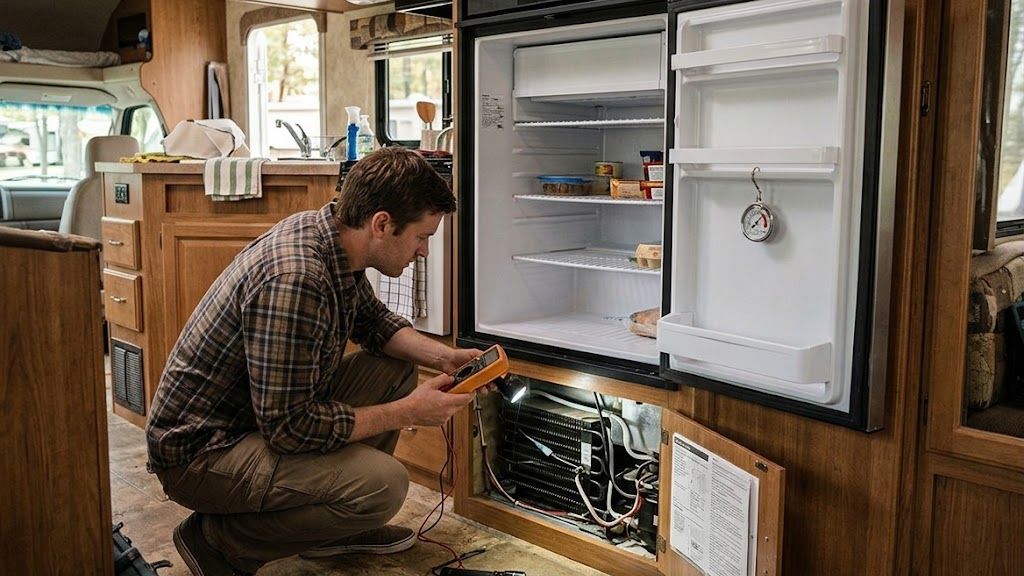
Considerably. A 6.7L Cummins or Power Stroke takes 12 to 15 quarts and a filter that costs more than a passenger-car filter by a wide margin, so a diesel oil service commonly lands at two to three times a car ticket. Motorhomes are their own category again, which is why RV oil change service gets quoted separately from automotive work.
The other quiet cost drivers:
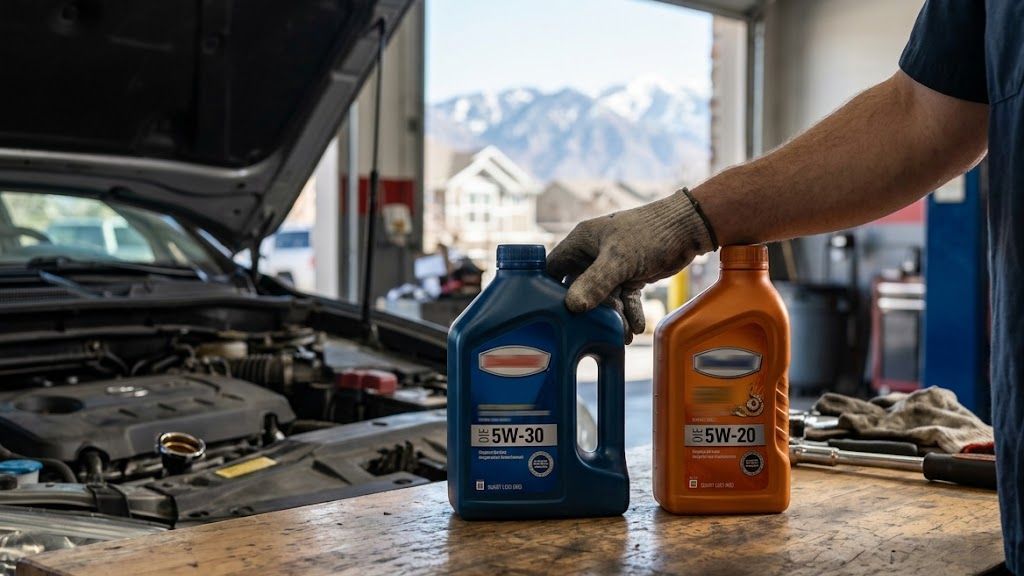
- Viscosity. 0W-20 and 0W-16 cost more per quart than 5W-30. Ultra-thin grades for hybrids cost more still, and right now they're also the hardest to find.
- Filter access. Some engines need the splash shield dropped or a cartridge housing pulled. That's labor.
- Drain plug hardware. A crush washer is a dollar. A stripped pan from someone else's overtightening is not.
- Disposal and shop supplies. $3 to $10, and legitimate, since used oil is regulated waste.
Is full synthetic worth the higher price?
For protection, yes. For price, it's roughly a wash, and most guides get this wrong by comparing per-visit cost instead of cost per mile.
Run the actual numbers:
| Price per visit | Interval | Cost per 1,000 miles | |
|---|---|---|---|
| Conventional | $55 | 5,000 mi | $11.00 |
| Full synthetic | $110 | 10,000 mi | $11.00 |
Dead even. The per-visit sticker shock is an illusion created by paying twice as much half as often.
Which makes protection the real tiebreaker, and there the answer isn't close. AAA's testing found synthetic oil performed 47% better than conventional across industry-standard tests, with the largest gains in turbocharged engines, towing, and temperature extremes. Every one of those describes a Wasatch Front vehicle.
Here's the part the cost guides leave out. If you drive severe service and shorten your synthetic interval to 5,000 or 7,500 miles, synthetic costs more per mile, not the same. That's a real trade-off, and it's worth understanding how often you actually need an oil change for your driving before you buy the extended-interval premium. If you're still weighing the two, we've broken down synthetic versus conventional oil in more detail.
How does Utah driving change your real cost?
It raises it, by shortening intervals. And Bountiful drivers hit two severe-service triggers most of the country doesn't.
Winter Inversions: From December through February, Wasatch Front valley temperatures sit near freezing for weeks. A four-mile run down Orchard Drive to the I-15 on-ramp never brings the engine to full operating temperature, so fuel and moisture that would normally boil off stay in the crankcase. Short cold trips are harder on oil than highway miles, and inversion season is made of short cold trips.
Grades and Altitude: Bountiful sits around 4,500 feet. Add a trailer up Parleys or a run to Bear Lake and you've got sustained high-load, high-heat operation, the exact condition every owner's manual files under severe service. Synthetic handles it better, but the interval still comes down.
There's a scheduling angle too. Davis County requires an emissions test every two years for vehicles under six years old, and annually for anything older than six (model year 1968+ gas, 1998+ diesel; older diesels and heavy-duty diesels are exempt). That test is the one appointment most Davis County drivers can't skip. Bundling an oil change with it saves a trip, and it's a natural moment to have someone check for the seeps that turn into engine oil leak repair later.
How can you lower your oil change price?
Six things that work, roughly in order of how much they save:
- Know your capacity before you call. It's in the owner's manual. Quoting the same capacity to every shop is the only way to compare prices honestly.
- Ask for the out-the-door number. Say "including filter, disposal, and shop supplies." The gap between advertised and actual is usually $15 to $25.
- Match the spec, not the brand. Any oil carrying the right API license and viscosity meets your warranty requirement. Paying a premium for a specific label buys marketing.
- Don't change early to beat a price increase. Intervals run on time and mileage. Coming in 2,000 miles early to dodge a surcharge costs more than the surcharge. The exception: if your car takes 0W-8 or 0W-16, book a week or two ahead so the shop can source your grade.
- Bundle it with your emissions visit. One trip instead of two.
- Skip the extended-interval upsell if you drive severe service. You won't reach the mileage that justifies it.
One thing that doesn't save money: choosing a shop purely on price and skipping the inspection. A $25 saving is a bad trade against a valve cover seep found six months late. If you're weighing where to go, the dealership versus local mechanic comparison covers what each actually includes.
Frequently Asked Questions
How long does full synthetic oil really last?
Most manufacturers specify 7,500 to 10,000 miles for full synthetic under normal service. Utah driving frequently isn't normal service. Short winter trips, mountain grades, and towing all push you toward the severe schedule, which typically means 5,000 to 7,500 miles regardless of what the bottle claims.
Why is my oil change still getting more expensive?
Base oil supply. Disruptions affecting Group III base stocks tightened availability of the main ingredient in full synthetics, major chains including Valvoline added surcharges during 2026, and supply is expected to stay tight into mid-2027. The increase is upstream of your local shop, so switching providers rarely avoids it entirely.
Can I use 0W-20 if my car calls for 0W-16?
Only if your manufacturer allows it. Toyota's 2026 dealer guidance permits 0W-20 in place of 0W-16 for a single service interval during the shortage, but that's Toyota's approval for its own engines. Check your manual or have the shop confirm the substitute is approved for your vehicle, and get it on the invoice.
Can I switch from conventional to full synthetic?
Yes, at any mileage. The idea that switching causes leaks in older engines is a myth left over from 1970s seal formulations. Synthetic won't create a leak, though its better detergency can reveal one that a sludge deposit was already hiding.
Does a mobile oil change cost more than a shop visit?
Usually $10 to $25 more, and it buys back an hour of your day. Wizard's runs mobile service across Bountiful, West Bountiful, Woods Cross, and Centerville, so the comparison worth making is against your time, not just the shop's counter price.
How much does a diesel truck oil change cost?
Two to three times a passenger car. A 6.7L Cummins or Power Stroke holds 12 to 15 quarts against a car's 4 to 6, and diesel-rated oil and filters cost more per unit. Ask for a quote by engine, since capacity varies widely across model years.
Do I need synthetic in an older, high-mileage car?
Not required, but often worth it past 100,000 miles. High-mileage synthetic blends add seal conditioners that help aging gaskets. If your engine already burns or leaks oil, fix that first. No oil grade compensates for a bad valve cover gasket.
Is a $40 oil change ever a good deal?
Rarely on full synthetic at current base oil prices. Five quarts of licensed synthetic plus a filter costs the shop close to that. A $40 full-synthetic offer is usually a loss leader priced to sell you something at the window.
Conclusion
Get your engine's oil capacity and required viscosity out of the owner's manual, then call two shops with those exact numbers and ask for the out-the-door price. That five-minute step is worth more than any coupon, because it's the only way to tell a genuinely cheaper shop from one that's quoting a smaller engine. If your car takes 0W-8 or 0W-16, ask about stock in the same call. For a quote on your vehicle, schedule an appointment with Wizard's Automotive & RV. Parts and labor are covered by our in-house 3-year/36,000-mile warranty.