How to Diagnose and Fix Engine Oil Leaks (Valve Covers & Oil Pans) in Bountiful, UT
Finding an oil leak comes down to one fact: oil falls downward and blows rearward once the vehicle is moving. The wettest spot on your engine is often not the source. The most useful thing you can do is degrease the area, drive for a couple of days, and then look for fresh oil on a clean surface.
As a starting rule, oil on top of the engine points to the valve cover. Oil dripping onto the ground beneath the middle of the engine points to the oil pan. Oil running down the side of the block suggests something higher up. Getting that diagnosis right before buying parts separates a one-visit repair from a repeat one, and it is the first step any shop offering careful auto repair services in Bountiful, UT should take.
Oil leaks are also the repair people put off longest, because a few drops on the driveway feel cosmetic. Gaskets do not heal, though, and a slow seep tends to become an active drip on its own schedule rather than yours.
How Do You Find Where an Engine Oil Leak Is Coming From?
The diagnostic sequence works on almost any engine. It costs a can of degreaser and a few days of patience, and it prevents the most common mistake in this repair: replacing a gasket that was never leaking.
Step One: Clean Everything First
Spray degreaser on the valve cover edges, the cylinder head, the sides of the block, and the oil pan flange, then wipe the area dry. Take a photo of the clean engine for comparison. Old oil residue makes every surface look guilty, so nothing can be diagnosed until the slate is blank.
Step Two: Drive, Then Look for Fresh Oil
Drive normally for two or three days and bring the engine fully up to temperature each time, since many leaks only appear once heat expansion opens the gap. Then inspect with a flashlight for wet, fresh oil rather than dry film. An oil pan gasket leak shows fresh oil tracing the seam where the pan meets the block. A valve cover leak shows fresh oil starting at the cover edge and running down from there.
Step Three: Use Dye If the Source Is Still Unclear
Ultraviolet dye added to the oil is the reliable answer for slow leaks. The dye circulates with the oil, and under a UV light the leak path glows bright yellow or green. That shows exactly where oil is exiting rather than where it collected, which is why most shops rely on it.
| Where You See Oil | Most Likely Source | Notes |
|---|---|---|
| Top of engine, around cover edges | Valve cover gasket | Often paired with a burning smell |
| Inside spark plug wells | Valve cover tube seals | Can cause misfires and coil damage |
| On top of the plastic engine cover | Valve cover gasket or oil filler cap | The cover hides the real source |
| Front of the engine, behind the pulleys | Timing cover or front crankshaft seal | Can soak the timing belt on belt engines |
| Ground beneath the middle of the vehicle | Oil pan gasket or drain plug | Check the plug and washer first |
| Running down the side of the block | Head gasket or higher component | Needs professional diagnosis |
| Rear of the engine, near the transmission | Rear main seal | Labor-intensive, so confirm before proceeding |
| Around the oil filter area | Filter housing gasket or loose filter | Common and inexpensive to fix |
What Are the Signs of an Oil Leak at the Valve Cover?
The valve cover, also called the cam cover or rocker cover, sits on top of the cylinder head and seals the top of the engine. When its gasket hardens or cracks, oil escapes onto extremely hot surfaces, which produces the symptom most people notice first.
A burning oil smell is the classic sign. Oil dripping onto the exhaust manifold or cylinder head vaporizes almost immediately. The acrid odor is usually strongest right after you park, because airflow stops carrying it away, and you may also see light smoke rising from the engine bay at a stoplight.
Also watch for oil pooling in the spark plug wells, which happens when the tube seals fail alongside the main gasket. That needs prompt attention, because oil sitting around the ignition coils damages them and causes misfires, turning a gasket job into a gasket-and-coils job. The technicians at Wizard's Automotive & RV pull the coils and check the plug tubes during any valve cover diagnosis, since the seals and gasket are usually replaced together anyway.
Is Oil in the Valve Cover Normal?
Oil inside the valve cover is normal. The cover encloses the camshafts and valve springs, and oil is constantly pumped up there to lubricate them, so you will see it if you remove the oil filler cap. Oil on the outside of the cover, along its edges, or in the spark plug wells is what signals a leak.
The PCV Connection Most People Miss
This detail explains many repeat failures. Every engine produces some blow-by, which is combustion gas that slips past the piston rings into the crankcase. The positive crankcase ventilation (PCV) system vents that pressure back into the intake. When the PCV valve clogs, the pressure pushes outward against the weakest seal, which is often the valve cover gasket.
Replacing the gasket without checking the PCV system means the new one faces the same pressure that pushed out the old one. A restricted PCV system is also linked to engine oil sludge, so both problems are worth checking together.
Oil on the Engine Cover or the Front of the Engine
Many modern engines have a plastic engine cover over the top. Oil on that cover usually comes from a valve cover leak or a loose oil filler cap underneath it. The cover traps the oil and hides the source, so it has to come off before anyone can trace the leak.
Oil on the front of the engine, behind the belt pulleys, points to a different set of seals: the timing cover gasket and the front crankshaft seal. These leaks matter more than their size suggests. On engines with a rubber timing belt, oil soaking the belt shortens its life, and the fix is usually planned alongside timing belt and water pump replacement.
What Are the Signs of a Leaking Oil Pan Gasket?
The oil pan bolts to the bottom of the engine and holds the oil supply, so leaks here show up on the ground rather than under the hood. A puddle beneath the middle of the vehicle after it sits overnight is the most common first sign.
Check the drain plug before assuming it is the gasket. A loose plug, or a crush washer reused during the last oil change, accounts for a meaningful share of suspected pan gasket leaks. That is a five-minute fix, not a several-hundred-dollar one. Look for oil concentrated right at the plug rather than spread along the pan seam.
Physical damage matters here too. Oil pans hang low, and a hard pothole strike, a curb, or debris on a gravel canyon road can dent the pan flange enough to break the seal. A bent flange will leak again even with a fresh gasket. RepairPal also notes that many cast aluminum pans can crack and keep leaking after a new gasket goes on, so the pan itself should be inspected, not just resealed.
Leaking oil causes damage of its own. Oil breaks down rubber hoses, belts, and motor mounts over time, so an ignored pan leak can shorten the life of parts that have nothing to do with the gasket.
Is a Seep Urgent, or Can It Wait?
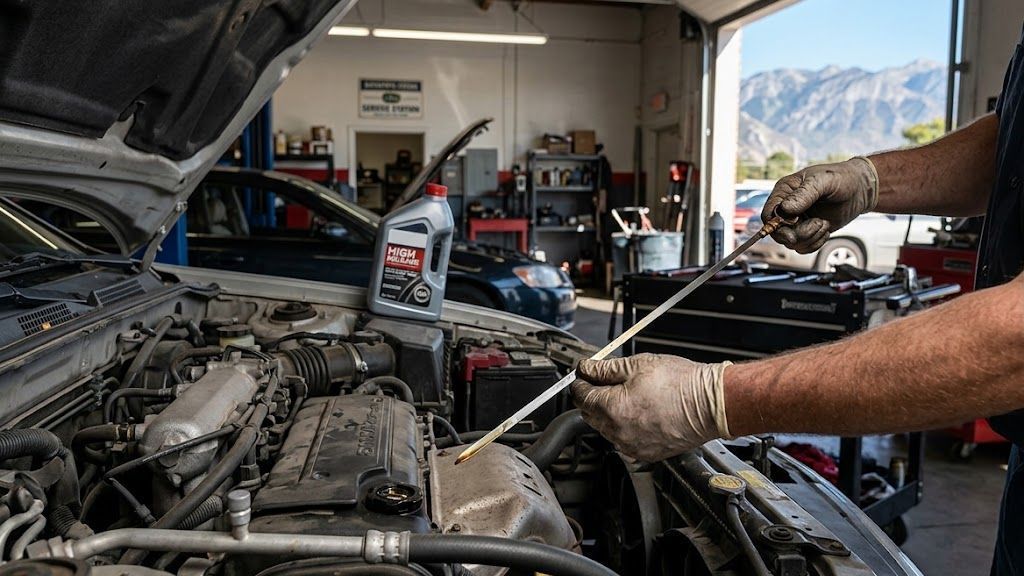
There is a real difference between a seep and an active leak, and treating them the same leads to either wasted money or engine damage. A seep leaves a light oil film without forming drops, and the dipstick level barely moves between changes. An active leak produces visible drips, fresh trails, smoke, or measurable oil loss.
A seep generally calls for monitoring and a repair plan, not an emergency appointment. An active leak needs prompt attention, because the underlying risk is running low on oil. Low oil means reduced oil pressure, more friction between internal parts, and real engine damage. If your oil pressure light comes on, stop driving rather than trying to reach the shop.
The fire risk deserves a mention as well. Oil dripping onto an exhaust manifold running several hundred degrees is not a theoretical hazard. Visible smoke from the engine bay means you should stop driving.
How Much Does Valve Cover and Oil Pan Leak Repair Cost?
Costs vary widely depending on which seal failed, because the parts are cheap and labor is most of the bill. RepairPal puts the average valve cover gasket replacement at $375 to $514, with labor at $288 to $423 and parts at only $87 to $91. The average oil pan gasket replacement runs $552 to $759, with labor at $433 to $636.
| Repair | Typical Cost (RepairPal average) | Why the Spread |
|---|---|---|
| Drain plug or crush washer | Low | Often resolved during an oil change |
| Valve cover gasket, easy access (e.g. Honda Civic) | $248 to $333 | Single cover, good access |
| Valve cover gasket, national average | $375 to $514 | Varies with cover count and access |
| Valve cover gasket, complex engine (e.g. BMW X5) | $869 to $1,233 | More components removed to reach the cover |
| Oil pan gasket | $552 to $759 | Pan access varies widely |
| Oil pan replacement(cracked or bent pan) | $823 to $1,044 | New pan plus the same labor |
| Rear main seal | Highest of this group | The transmission usually has to come out |
The oil pan spread is worth explaining. On some vehicles the pan drops in minutes, while on others the technician has to support the engine and lower the subframe to clear it. That single design difference can multiply the bill on otherwise similar cars.
A written estimate should name the specific leak source and the parts being replaced. For rear main seal and head gasket leaks, which require engine repair level work, confirm the diagnosis with a dye test before approving the job.
Why Do Gaskets Fail Faster in Northern Utah?
Gaskets fail as rubber and cork harden, shrink, and lose elasticity, and heat cycling drives that process. Vehicles here swing from single-digit winter mornings to summer canyon climbs that hold underhood temperatures high. Rubber also contracts in the cold, so an aging gasket can pull away from its sealing surface on a freezing morning and seal again once warm. That is why drivers often notice a leak that only shows on cold days.
Road conditions add stress from below. Winter brine corrodes pan bolts and flanges, and freeze-thaw potholes along I-15 and local streets strike the lowest part of the engine. If you have noticed driveway spots that were not there last spring, contact us for a proper leak trace before topping off becomes routine.
Three Habits That Reduce Leak Risk
- Check the oil level monthly, since catching loss early tells you a leak exists before it stains anything.
- Have the PCV system checked at higher mileage, because crankcase pressure is a common hidden cause.
- Use a new crush washer at every oil change, and confirm the drain plug is torqued to spec rather than overtightened.
Frequently Asked Questions
Can you drive with an oil leak?
It depends on severity. A slow seep that does not measurably drop the dipstick level between checks is usually safe to drive while you schedule the repair. An active drip, visible smoke, or a burning smell means oil is reaching hot components and the level may be falling faster than you realize. If the oil pressure warning light comes on, stop driving and arrange a tow.
Do stop-leak additives actually work?
They can temporarily slow a very minor seep by making rubber seals swell slightly. They do not repair a torn, hardened, or displaced gasket, and they do nothing for a cracked cover, a bent pan flange, or a clogged PCV valve. Treat them as a short-term measure at best.
How much oil loss between changes is normal?
Some consumption is normal, especially on higher-mileage engines, and many manufacturers accept a modest amount over a full oil change interval. The trend matters more than the exact figure. If you are adding oil more often than a year ago, something changed and is worth diagnosing. For engines with hardened seals, high-mileage oil can help slow minor seepage.
Why is there oil in my spark plug wells?
The valve cover has separate seals around each spark plug tube, and they fail with age just like the main gasket. Oil in the wells surrounds the ignition coils, which leads to coil failure, misfires, and often a check engine light. The tube seals and main gasket are typically replaced together as one job.
Is a valve cover gasket leak the same as a head gasket leak?
No, and confusing the two is expensive either way. The valve cover gasket seals the top of the engine under low pressure and is a comparatively minor repair. A head gasket sits between the block and cylinder head and seals combustion pressure. Its failure usually involves coolant loss, overheating, white exhaust smoke, or oil and coolant mixing, and it calls for engine repair.
Conclusion
Oil leaks reward patience at the diagnostic stage more than almost any other repair. Cleaning the engine, driving it, and looking for fresh oil on a clean surface costs nothing and often prevents paying for a gasket that was never the problem. With wide temperature swings, canyon heat, winter brine, and potholes, gaskets here work harder than mileage alone suggests.
If you see spots on the driveway or smell burning oil after you park, have the source traced rather than guessing between the valve cover and the pan. Book a service appointment and our technicians will run a dye test when the source is unclear, check the PCV system so the new gasket lasts, and give you an estimate that names exactly which seal is being replaced.