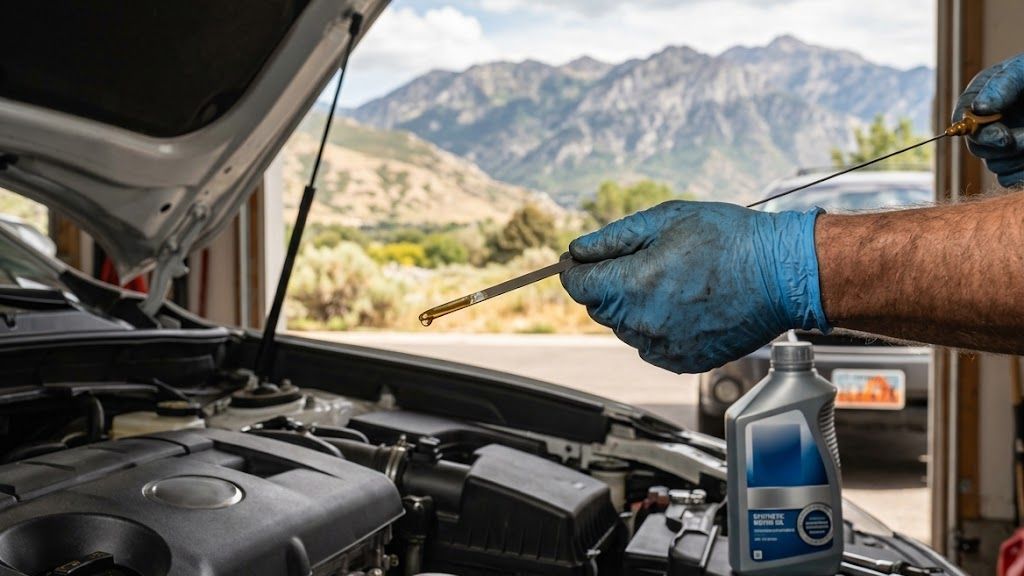
How Commercial Fleet Auto Repair Services Support Bountiful, UT Businesses
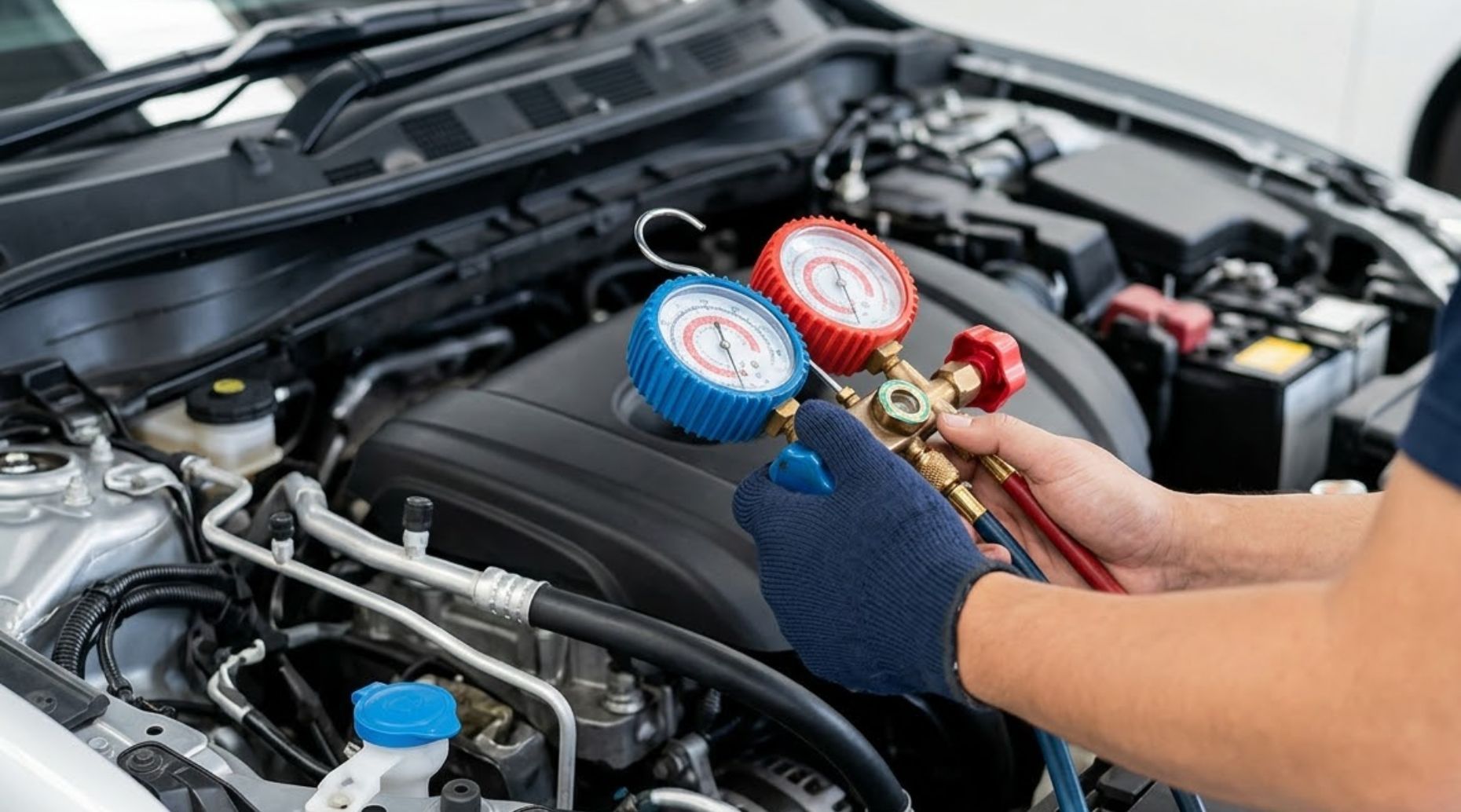
Wizard's Automotive & RV provides fleet repair and maintenance for businesses in Bountiful and across northern Utah. We service passenger vehicles, light and heavy-duty trucks, vans, and diesel units, either in our Bountiful shop or on-site at your location. The goal is simple: keep your vehicles working and your downtime planned rather than forced.
For a business that runs vehicles, the repair bill is rarely the expensive part. The expensive part is the van sitting on a lift while a crew waits, a delivery slips, and a customer starts calling. Industry estimates put unplanned downtime at roughly $448 to $760 per vehicle per day, and emergency repairs typically cost three to nine times what the same work costs when it is scheduled.
Much of that is controllable. Roughly 78 percent of fleet downtime traces back to preventable failures, and structured maintenance programs consistently cut unexpected breakdowns by 30 to 40 percent. The vehicles are not failing randomly. They are failing on a schedule nobody wrote down.
Fleet Vehicles We Service
Most small and mid-size fleets are mixed, so one shop that can handle every vehicle saves coordination time. Our technicians work on:
- Passenger cars and SUVs used for sales, service calls, and staff travel
- Light-duty and heavy-duty pickups, including work trucks with racks, toolboxes, and trailers
- Cargo and service vans running delivery and trade routes
- Diesel trucks, including Duramax, Cummins, and Powerstroke engines, through our diesel truck repair service
- RVs and generators, for businesses that run them as mobile offices or job-site power
That range covers routine maintenance, diagnostics, and repairs, including brakes, cooling systems, engines, transmissions, and electrical faults.
On-Site Fleet Service
Pulling a vehicle off the route to drive it to a shop costs time on its own. Our technicians can come to your yard or job site for maintenance and many repairs, so vehicles are serviced where they are parked. On-site visits suit routine service across several units at once, and they keep drivers working instead of waiting.
Service Area
Our shop is at 560 800 South in Bountiful. We serve fleets across Davis County and the Wasatch Front, including Bountiful, West Bountiful, Woods Cross, Centerville, Ogden, Sandy, Draper, and Provo. See our Salt Lake County, Utah County, and Draper pages for more on each area.
What Is Included in a Commercial Fleet Maintenance Program?
A real program is a written schedule tied to each vehicle, not a reminder to call the shop when something sounds wrong. It combines routine service intervals, safety inspections, documented records, and a defined process for repairs that fall outside the plan.
Scheduled Preventive Service
This is the backbone. Oil and filter changes, tire rotations and pressure checks, brake inspections, fluid checks, belt and hose inspections, battery and charging tests, and suspension and steering checks all run on set intervals. Those intervals should reflect how each vehicle actually works, since a service van making forty short stops a day wears differently than a truck running highway miles.
Compliance Inspections and Documentation
Commercial vehicles carry inspection obligations that passenger cars do not, and the paperwork matters as much as the wrench work. A good program tracks due dates, stores certificates, and flags renewals before they lapse rather than after an officer points it out.
Repair Triage and Communication
Not everything can be scheduled. When a vehicle comes in with an unexpected fault, the most useful thing a shop provides is a fast, honest assessment: is it safe to keep running, can it wait until the weekend, or does it need to come off the road now? That answer lets a manager plan around the problem instead of guessing. Warning lights and intermittent faults often trace to wiring or modules, which our electrical repair team diagnoses.
Records That Follow the Vehicle
Per-vehicle history turns maintenance from an expense into a decision-making tool. It shows which units consume disproportionate repair dollars, and when replacement makes more sense than another round of repairs. Vehicles over ten years old account for a small share of miles driven but a large share of total maintenance spend, and that pattern is invisible without records.
Why Unplanned Downtime Costs More Than the Repair Itself
The repair invoice is usually the smallest line in the real total. Add towing, idle labor, the rescheduled job, overtime to catch up, and the customer who now has a reason to shop around. None of those appear on the shop's estimate, but all of them hit the same operating budget.
| Approach | What It Looks Like | Typical Outcome |
|---|---|---|
| Reactive repair | Fix vehicles after they break | Emergency repairs cost 3 to 9 times more |
| Scheduled preventive service | Set intervals per vehicle, tracked | 30 to 40 percent fewer unplanned breakdowns |
| Cost of a breakdown day | Vehicle out of service unexpectedly | Roughly $448 to $760 per vehicle per day |
| Return on preventive spending | Every dollar put into scheduled service | Commonly returns $4 to $8 in avoided cost |
| Effect on asset life | Consistent maintenance over years | Vehicle life extended by around 20 percent |
The math scales quickly. A five-vehicle operation with three avoidable breakdown days per vehicle each year loses meaningful capacity. A fifteen-vehicle fleet has more than sixty service points to track across different schedules, which is past the point where memory or a shared spreadsheet works reliably.
What Inspections Do Commercial Vehicles in Utah Need?
Utah removed the annual safety inspection requirement for most passenger vehicles in 2018, and many business owners assumed the change applied to them. It did not. Since January 1, 2018, all commercial vehicles in Utah require an annual safety inspection regardless of weight, and the certificate must be kept in the vehicle at all times.
The inspection is not a prerequisite for registration, which is exactly why it gets overlooked. Nothing blocks your renewal if it lapses. You simply have no valid certificate to show when an officer asks for one, and the vehicle pays the price.
| Requirement | Who It Applies To | Frequency |
|---|---|---|
| Utah commercial safety inspection | All commercial vehicles, any weight | Annually, certificate carried in vehicle |
| Federal periodic inspection, 49 CFR 396.17 | Commercial motor vehicles over 10,001 lbs GVWR | Annually |
| Davis County emissions testing | Vehicles per county schedule by model year | Varies by model year |
| Pre-trip driver inspections | Drivers of applicable commercial vehicles | Each shift |
Enforcement is real. The Utah Highway Patrol Commercial Vehicle Enforcement Bureau operates weigh stations along I-15 and I-80 and runs roving patrols on state highways, using Commercial Vehicle Safety Alliance standards. Inspectors check brakes, tires, lights, and coupling devices. A serious defect can trigger an out-of-service order that grounds the vehicle where it sits until repairs are made, which is far more disruptive than a scheduled maintenance visit.
How a Dedicated Fleet Mechanic Keeps Bountiful Vehicles Moving
Working with one consistent fleet mechanic changes the relationship from transactional to operational. When the same technicians see the same vehicles repeatedly, they learn the fleet's patterns. They notice which units are trending toward trouble, and they order parts ahead of a scheduled visit rather than after a failure.
Local conditions shape those patterns. Vehicles working the bench above Bountiful Boulevard and climbing canyon grades put sustained load on brakes, cooling systems, and transmissions. Winter brine along I-15 and Legacy Parkway attacks brake lines, suspension bushings, and undercarriage parts. Short-trip delivery routes are hard on batteries and exhaust systems, because the engine rarely reaches full operating temperature. That is why our team schedules cooling system checks ahead of summer and battery and charging tests ahead of the first hard freeze.
Grouping Work to Reduce Trips
Bundling is one of the simplest efficiencies in fleet service. If a vehicle is coming in for an oil change and the brakes are at 40 percent, doing both in one visit costs one downtime slot instead of two. The same logic applies to timing the annual safety inspection alongside scheduled service, so compliance never becomes its own separate interruption.
How to Choose a Fleet Repair Shop in Bountiful
Look for capability across your actual vehicle mix, transparent written estimates, and scheduling that respects your operating hours. A shop worth building a schedule around should also keep complete service records for every unit and have one point of contact who knows your account.
Four questions worth asking in the first conversation:
- Can you service every vehicle class we run, including light trucks, cargo vans, and diesel units?
- How do you handle a vehicle that needs to go back out today?
- What does your written estimate include, and do you call before doing work beyond the approved scope?
- How do we access service history when deciding whether to keep or replace a unit?
Also ask whether the shop performs the Utah commercial safety inspection itself, and whether it offers account terms such as priority scheduling or consolidated invoicing.
Warranty, Parts, and Consistency
Ask what the warranty covers for parts and labor, and whether the shop uses original equipment or aftermarket parts by default. Neither answer is automatically wrong, but consistency helps a fleet. Knowing exactly what went into each vehicle makes future diagnosis faster and makes cost comparisons across units meaningful.
Building a Fleet Maintenance Schedule That Fits Your Operation
Start by listing every vehicle with its mileage, age, and typical duty. Then set intervals based on how each one is actually used, not a single fleet-wide rule. Idle-heavy and short-trip vehicles need more frequent attention than the odometer suggests, and the manufacturer's severe service intervals are usually the right baseline for commercial work in this region.
A practical starting framework:
- Weekly driver checks: tire pressure, lights, fluid levels, and any new noises or warning lights.
- Every service interval: oil and filter, tire rotation, brake inspection, fluid condition, belts and hoses.
- Twice yearly: suspension and steering inspection, battery and charging test, cooling system pressure check.
- Annually: Utah commercial safety inspection, alignment check, and a full undercarriage review after winter.
- Ongoing: per-vehicle cost tracking, so replacement decisions rest on data rather than instinct.
Getting a program started takes less work than most owners expect. It usually begins with a baseline inspection across the fleet to see where each vehicle stands. If you run even a handful of vehicles without a written schedule,
contact us to plan that baseline for your mix, in our shop or at your location.
Frequently Asked Questions
How many vehicles count as a fleet?
There is no universal threshold. Many businesses running just two or three vehicles benefit from fleet-style scheduling and records. What matters more than the count is whether the vehicles support revenue, because that is what makes downtime expensive and planned service valuable.
How often should fleet vehicles be serviced?
Follow the manufacturer's severe service schedule rather than the normal one. Commercial use nearly always meets the severe criteria through stop-and-go driving, heavy loads, idling, and temperature extremes. For most light commercial vehicles that means noticeably shorter intervals than a personal car. Track idle-heavy vehicles by engine hours as well as miles, since the odometer understates their wear.
Can you service fleet vehicles at our location?
Yes. Our technicians offer on-site service, so routine maintenance and many repairs can be done at your yard or job site. That is often the most efficient option when several vehicles are due at once.
Do commercial vehicles need a safety inspection in Utah?
Yes. Since January 1, 2018, all commercial vehicles in Utah require an annual safety inspection regardless of weight, and the certificate must stay in the vehicle. It is not tied to registration renewal, so nothing reminds you automatically. Vehicles over 10,001 pounds in interstate commerce also fall under the federal annual inspection in 49 CFR 396.17.
Is it cheaper to use one shop for the entire fleet?
Usually, and the savings come from more than the labor rate. A single shop builds history on each vehicle, catches recurring patterns, stocks the parts your fleet uses, and keeps billing in one place. Spreading work across several providers fragments records, which are exactly what you need for repair-versus-replace decisions.
What should drivers check before each shift?
A quick walkaround covering tires, lights and signals, mirrors and glass, leaks under the vehicle, brake feel, and new dashboard warnings catches many problems early. Drivers notice changes long before a scheduled inspection would. Give them a simple way to report issues, and act on what they report.
Conclusion
Fleet service is about protecting capacity, not just a repair budget. When unplanned downtime runs several hundred dollars per vehicle per day, and emergency work costs several times what scheduled work does, a written maintenance plan pays for itself. Utah's annual commercial safety inspection and enforcement along I-15 make staying organized a compliance matter as well.
If your vehicles are maintained reactively today, a baseline inspection is the natural first step. Wizard's Automotive & RV services cars, trucks, vans, and diesel units for businesses across Bountiful and the Wasatch Front, in our shop or on-site. Book a fleet service appointment or call (801) 994-6826 to get started.