Why Is My Car AC Not Blowing Any Air and How Do You Test the Blower Motor in Bountiful, UT?
If no air comes out of the vents at all, the problem is airflow, not cooling. That means the blower motor, the blower motor resistor, a blown fuse, a clogged cabin filter or a stuck blend door. Low refrigerant and a failing compressor cause warm air, not no air, so they are not the place to start.
The fastest way to narrow it down takes about thirty seconds: turn the ignition on, set the fan to its highest speed, and listen.
Start Here: What Happens at Each Fan Speed
This single test eliminates most of the possibilities before you open anything.
- No air at any speed, and no sound from the fan: The blower motor is not getting power or has failed. Check the fuse first, then the motor itself.
- Air on high only, nothing on the lower speeds: Classic blower motor resistor failure. The resistor controls the lower speeds, and high speed usually bypasses it entirely, which is why it keeps working after the others die.
- Weak air at every speed: The motor is running but something is restricting flow. Cabin air filter first, then the intake and the evaporator.
- Air comes out of the defrost vents only: Not a blower fault. A blend or mode door actuator has failed, or on older vehicles a vacuum line has come off.
- Air blows normally but it is warm: Different problem entirely. Head to our guide on why a car AC blows warm air instead.
What Actually Causes No Airflow
Blower motor failure. The motor wears out, the bearings seize or the brushes wear down. Often it gives warning first, squealing or rattling for weeks before it stops.
Blower motor resistor. The most common single failure in this whole list, and the cheapest part. It burns out from heat, usually because a dirty cabin filter forced the motor to work harder and draw more current.
Blown fuse. A fuse protects the blower circuit. If it has blown, something made it blow, so a fuse that fails again immediately means a short or a seizing motor rather than a bad fuse.
Clogged cabin air filter. Cheap and often overlooked. A filter packed with leaves and dust will cut airflow to almost nothing and take the resistor with it eventually.
Blend or mode door actuator. A small electric motor that directs air between the face, floor and defrost vents. When it fails the air keeps flowing but goes somewhere you did not ask for. Often announced by a repeated clicking behind the dash.
Wiring or the blower control module. On newer vehicles the resistor is replaced by a solid-state module. Same symptoms, different part.
How to Test the Blower Motor Yourself
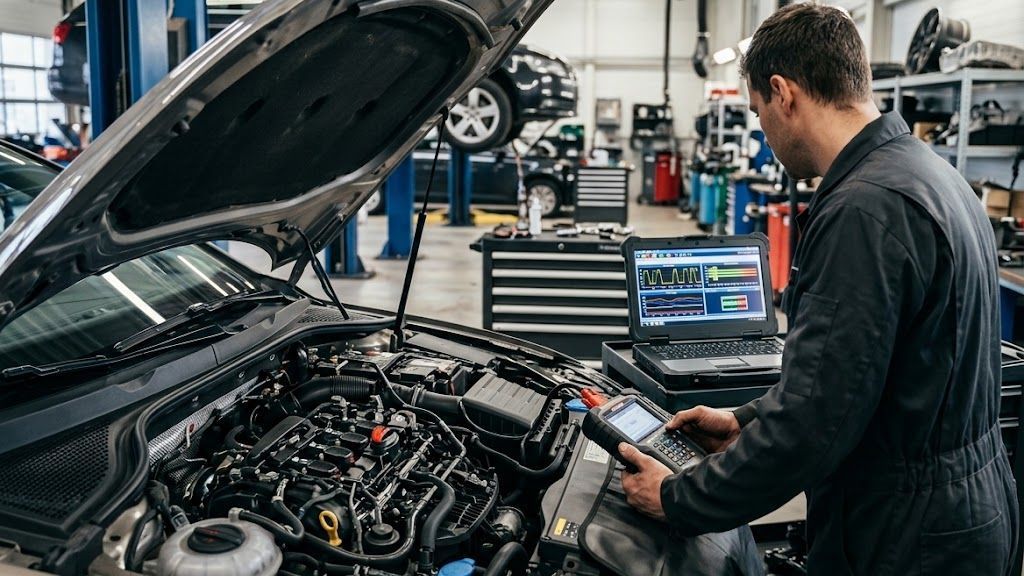
You need a multimeter, a screwdriver and about twenty minutes.
- Check the fuse. Find the blower or HVAC fuse in the interior fuse box, pull it and hold it up to the light. A broken filament is visible. Replace with the same amperage, never higher. If the new fuse blows straight away, stop and have it looked at, because something is drawing too much current.
- Listen at the blower housing. With the fan on high, put your hand on the blower housing under the passenger side dash. A motor that is trying to run will vibrate. Nothing at all points to a power or motor problem, vibration without airflow points to a blockage or a failed fan cage.
- Test for voltage at the motor. Unplug the blower motor connector and set your multimeter to DC volts. With the ignition on and the fan on high, you should read close to battery voltage, around 12 volts, across the two terminals. Voltage present but no fan means the motor has failed. No voltage means the fault is upstream, in the fuse, resistor, switch or wiring.
- Bench test the motor directly. With the motor unplugged, run jumper wires from the battery straight to the motor terminals. If it spins, the motor is good and your problem is upstream. If it does nothing, or turns slowly and noisily, replace it.
- Check the resistor. Unplug it and test continuity across its terminals. An open circuit on one or more paths confirms it. Inspect the connector too, since heat damage and melted pins are common and replacing the resistor without the connector just repeats the failure.
Disconnect the battery before removing panels or handling wiring.
Does a Bad Blower Motor Affect the AC?
Yes, but only the delivery, not the cooling. The AC system can be working perfectly, producing cold air at the evaporator, and you will feel none of it if the blower is not pushing it through the ducts. The refrigerant charge, the compressor and the condenser are all unaffected.
This matters at the shop counter. If a shop responds to no airflow by recommending a refrigerant recharge, they have not diagnosed the fault. A recharge will not move air.
What It Costs to Fix
Repair Typical Cost Notes Cabin air filter $30 - $80 Often the entire fix, and the one to rule out first. Blower motor resistor $100 - $250 Part is inexpensive, most of the cost is access. Blower motor fuse $5 - $20 Only a real fix if nothing made it blow. Blower motor replacement $300 - $800 Varies with access, an hour on some vehicles and four on others. Blend door actuator $250 - $600 Some sit behind the dash, which is where the labor goes. AC system diagnostics $100 - $200 Applied to the repair in most cases.
Replacement takes about one to two hours on most vehicles. On models where the motor sits deep behind the dash it runs considerably longer, which is where the top of the range comes from.
When to Stop and Call a Shop
DIY is reasonable for a fuse, a cabin filter, and a blower motor that sits behind an accessible panel. Hand it over when:
- A replacement fuse blows immediately, which means a short or a seizing motor
- Testing shows no voltage anywhere and you cannot trace where it stops
- The motor is buried behind the dash or the evaporator housing
- Symptoms come and go, which usually means a connector or a wiring fault rather than a part
- The vehicle uses a blower control module instead of a resistor
Can You Drive With It?
Short term, yes. Longer term, no, for two reasons. Without airflow you lose defrost, which is a visibility and safety problem the first cold morning. And a blower motor that is drawing too much current while failing can overheat its connector and cause wiring damage that costs more than the motor did.
Frequently Asked Questions
Why does my AC only blow on the highest setting?
The blower motor resistor has failed. High speed usually bypasses the resistor and feeds the motor directly, so it keeps working while the lower speeds do not. The resistor is one of the cheaper AC parts.
Can a bad blower motor cause no AC in the car?
It causes no airflow. The AC will still cool the evaporator, but without the blower nothing reaches the cabin. The cooling side of the system is unaffected.
Does a blown fuse stop the blower motor?
Yes, completely. Check the fuse first because it takes two minutes. If a new fuse blows right away, there is a short or a failing motor drawing too much current, and it needs diagnosing rather than another fuse.
How long does it take to replace a blower motor?
One to two hours on most vehicles. Access is the variable. Some sit behind a single panel in the passenger footwell, others require removing part of the dash.
What tools do I need to test the blower motor?
A multimeter, a screwdriver set and jumper wires for a bench test. Disconnect the battery before removing panels.
Why is there no air coming out of my vents but the fan is running?
The air is going somewhere else. A failed blend or mode door actuator sends it to the defrost or floor vents instead of the face vents. A badly clogged cabin filter or a collapsed duct will also do it.
Get It Diagnosed in Bountiful
If the tests point upstream of the motor, or you would rather not pull the dash apart, Wizard's Automotive & RV handles auto AC repair and diagnostics for drivers in Bountiful and across Davis County. Electrical faults behind the dash are auto electrical repair work, and we do both in house. Book an appointment or call (801) 994-6826.